Advice on Engine Build Gen 2

serafins

Enthusiast
Joined
Sep 2, 2024
Posts
130
Reaction score
71
Location
Metro Detroit
Going to be putting together an engine for my Gen 2 this winter.

I have GTSR heads that were ran at Lemans. These are the big port heads with "stock" bowl and runners. Although if you look close you can see where Caldwell ported them and then bead blasted the runners and bowl to make it look untouched. On top will be a Gen 3 intake ported to match by Greg Good. Single blade throttle body will be used. T&D roller rockers 1.7. Compression should be right at 11:1 with a 4.030 diameter, .40 thickness MLS head gasket.

Cam will be custom through JMB. Oiling will be external wet sump with mods to the windage tray to correct the drainback issues. JMB spins to 7k on similar builds. I don't want to go quite that high but I think peak power will have to be north of 63-6400 with how big the head and intake ports are.

Now, the questions that I haven't been able to answer:

is there any advantage to switching to the Gen 3 timing set? I have heard of a few people doing this. I know I have to go Gen 3 if I want an adjustable cam gear. Before I finalize the cam I'd like to get it made for the gen 3 timing setup if necessary.

Is there any reason to use the Gen 2 intake gaskets over the Gen 3 gaskets? The Gen 3 looks like a superior design and otherwise identical.

Is 11:1 going to be too much compression? The cam is going to be fairly large which I know will help bleed off compression down low, and up top detonation isnt as likely to occur. But I have no experience building these engines. I come from the SBF world where an aluminum headed engine can run 11:1 no problem with an identical bore and similar stroke to the viper engine. So I assume it will be ok. But would love to hear from someone with experience. The alternative is to run a stock thickness head gasket which will drop compression to the 10.5:1 range.

 

99RT10GTS

Enthusiast
Joined
Aug 24, 2022
Posts
935
Reaction score
295
Location
Tennesse
On the question of the timing sets, Gen 2 is typically a single bolt, the Gen 3's are a 3 bolt setup. Prefix sells 3 bolt cam wheels, but do not use the Gen 3 cam wheel because the timing marks are in a different location and will not work.

With a proper tune, 11.0 is fine, but I would try up the quality of fuel, maybe mix in some 110 for safety and more power. .
 

Goggles Pizano

Enthusiast
Joined
Nov 25, 2009
Posts
772
Reaction score
217
You machining oiling on the crank and block for cylinder 2 (if I remember correctly) bearing lack of oil?

What ecu are you using?
 

Dan Cragin

Legacy/Supporting Vendor
Supporting Vendor
Joined
Feb 16, 2007
Posts
1,406
Reaction score
195
Location
LA, CA
The GTSR heads cool well and have little core shift, so they can be ported fairly well without the exhaust ports cracking, but they really don't flow that well as the GTSR
was a restricted motor. Changing to Gen 3 heads, Stryker Heads or the Gen 4 conversion will make big power. It just depends on your HP goal. With that Gen 3 intake you
loose a lot of torque. Only advantage is to run the engine over 6500rpm, in which case you need to at least run an external oil pump, or a dry sump. You can get away with
just the external pump.

They don't make aftermarket adjustable timing sets anymore, so yes a Modified Gen 3 timing will work. The cam timing is different so you need to machine it and modify it
so you can degree the cam. Prefix does this. You will want to specify a 3 bolt cam as well. Some cams can be made in billet, which is another good option. You will want a
performance low bleed lifter with a oil through roller if you can get that.

I never ran more than 10.25 to compression on street motors. If you have lots of overlap or a small LSA you can go more. Problem is this motor has no knock control. If you
get some bad gas and run it hard or track it, your will hurt the motor. Trust me I know.

Im sure your engine builder will be doing the normal bottom end upgrades and improving the oiling. Nitrating the crank is common and a SFI balancer is a must.

Hope this helps.
 
OP
OP
S

serafins

Enthusiast
Joined
Sep 2, 2024
Posts
130
Reaction score
71
Location
Metro Detroit
The GTSR heads cool well and have little core shift, so they can be ported fairly well without the exhaust ports cracking, but they really don't flow that well as the GTSR
was a restricted motor. Changing to Gen 3 heads, Stryker Heads or the Gen 4 conversion will make big power. It just depends on your HP goal. With that Gen 3 intake you
loose a lot of torque. Only advantage is to run the engine over 6500rpm, in which case you need to at least run an external oil pump, or a dry sump. You can get away with
just the external pump.

They don't make aftermarket adjustable timing sets anymore, so yes a Modified Gen 3 timing will work. The cam timing is different so you need to machine it and modify it
so you can degree the cam. Prefix does this. You will want to specify a 3 bolt cam as well. Some cams can be made in billet, which is another good option. You will want a
performance low bleed lifter with a oil through roller if you can get that.

I never ran more than 10.25 to compression on street motors. If you have lots of overlap or a small LSA you can go more. Problem is this motor has no knock control. If you
get some bad gas and run it hard or track it, your will hurt the motor. Trust me I know.

Im sure your engine builder will be doing the normal bottom end upgrades and improving the oiling. Nitrating the crank is common and a SFI balancer is a must.

Hope this helps.
Thanks Dan. Very helpful. I was hoping you'd chime in as you set this car up for the original owner and it still runs great 25 years later. I'd hate to grenade your handiwork.

I'll be bumping the compression down some then to get it as close to 10.25:1 as I can with 64cc chambers on the heads. SFI balancer is 100% happening as part of the external wet sump kit. Nitrating the crank probably not. Goal is to not pull the short block from the car yet. I'll inspect the bearings next season and see if it needs some help. In that case it will get the full blown ARP stud/line boring treatment.

The goal isn't ultimate HP. It's more so a project to put some old Lemans-run parts back into service again instead of having them just collect dust. I picked the Gen 3 intake because it looked the most like the GTSR individual throttle body box. But if it turns out to be a dog I'll have Greg do the Gen 2 intake and put it back on. I'm not married to anything in the build except the heads.

It will be getting an external wet sump and all the pan/windage tray tricks.

It will be running stock ECU tuned by Prefix if I can get away with it. Their shop is about 10 minutes from my house. Preliminarily they think they'll be able to tune it, but if not that will give me an excuse to go Motec and incorporate a flex fuel setup.

My hope is these heads are hiding a few surprises. These are not the later GTSR heads available through the Mopar catalog. These were the 1st run heads run by Caldwell at Lemans in 1997. The heads were cast in 1996. They wear stock part numbers but they are nowhere near stock. The intake ports are 2.35" by 1.25". I bought them from a guy who was a test driver with Caldwell, and allegedly they were on one of the cars that finished LeMans in 1997 and ran 12th at Daytona in GT1 earlier in the year. The ports look CNC'd and then sandblasted to me. But I can't verify any of that and won't know until I put it together. At the end of the day I'll be happy if it runs good and picks up a few rpm over the stock 5900 cutoff.
 

Thomas_Czys

Enthusiast
Joined
Mar 2, 2025
Posts
1
Reaction score
1
Location
France
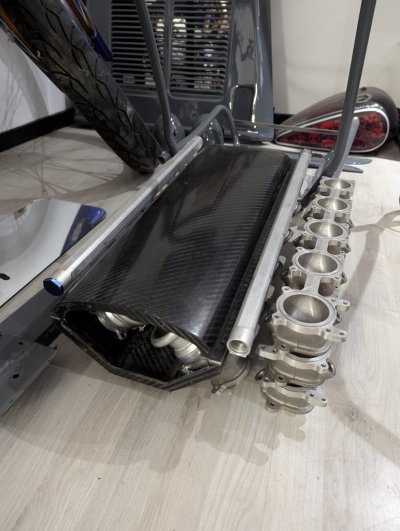
Hi, I have some original ITB from a GTS-R. Would you be interested in having them remanufactured? I'm planning a naturally aspirated build like yours, with ITB camshafts, reworked cylinder heads, etc.
 

Attachments

  • PXL_20241112_165031759.jpg
    PXL_20241112_165031759.jpg
    138.4 KB · Views: 22
OP
OP
S

serafins

Enthusiast
Joined
Sep 2, 2024
Posts
130
Reaction score
71
Location
Metro Detroit
Hi, I have some original ITB from a GTS-R. Would you be interested in having them remanufactured? I'm planning a naturally aspirated build like yours, with ITB camshafts, reworked cylinder heads, etc.
If you're saying you're letting those go I'd be very interested. I'll send you a PM.
 

99RT10GTS

Enthusiast
Joined
Aug 24, 2022
Posts
935
Reaction score
295
Location
Tennesse
Hi, I have some original ITB from a GTS-R. Would you be interested in having them remanufactured? I'm planning a naturally aspirated build like yours, with ITB camshafts, reworked cylinder heads, etc.

How much?
 
OP
OP
S

serafins

Enthusiast
Joined
Sep 2, 2024
Posts
130
Reaction score
71
Location
Metro Detroit
Just some thoughts after speaking to an engineer on the new GM LS6 small block and getting some details on 2 high rpm viper engine builds.

I had an interesting conversation with one of the engineers that worked on the new GM small block a couple weeks ago right after it was publicly announced. It's a high torque, high revving (7k rpm), 13:1 compression 409ci engine that runs on pump gas. Aside from altering cylinder pressure slightly with VVT, they were able to run this high compression without reliability concerns by increasing head cooling, running very tight piston-head clearance (quench), and designing a very fast burn combustion chamber with no potential hot spots. It uses a lo-ram intake with a fairly small plenum (pretty much guaranteed to give no charge effect).

In addition to this, I had the chance to inspect an 8000 rpm, 13:1 compression pump gas N/A Calvo built Gen 5 that an acquaintance of mine just took delivery of. He was tearing it down to lower the compression, swap the rods, etc. to boost it. It had 0 deck pistons (fly cut for valve reliefs) and a very thin head gasket, probably .030 or so. The combustion chambers were totally polished. Stock Gen 5 intake.

Then I spoke to a guy with the shop that last refreshed the engine on the GTS-R race car that recently sold on BAT. In race trim, that engine was set up at 12:1 compression with untouched GTS-R heads. Deck clearance was 0, and a head gasket in the range of .040 was used. Good quench (.040) and they were able to run on the equivalent of 93 octane (Euro 98). The GTSRs obviously used individual throttle bodies with a large carbon fiber plenum box.

All of these builds are quite different from each other, but all run high compression and high rpm AND make good torque. They all have in common great quench and head cooling. The GTSR and the GM engine also get their cylinder pressure from compression, not charge effect (Calvo Gen 5 also maybe, I didn't think to look if the intake and throttle bodies had been modded). They also all run fairly large cams, with the Calvo and GM engine using VVT to smooth the idle in lieu of using a smaller cam. Without knowing the specs, I cannot say for sure how the valve events are affecting cylinder pressure, but obviously this is also a factor in making these combos work.

The stock gen 2 viper differs from this formula quite a bit. It has no quench (.084 deck clearance, which is just about exactly what you don't want) because the piston sits down .030 in the hole, and the head gasket is .054 thick. It has heads that cool relatively poorly. Therefore, it is no real surprise it has 9.6:1 compression. The combustion chamber shape is actually not awful, but it's a 1960's esque heart shaped design with well defined edges. This has been foregone in favor of shallower, wedge shaped chambers like seen in the Gen 4 viper and newer GM heads, where the bowl tapers out smoothly out from valves.

Interestingly, despite this, the Gen 2 viper engine and the new GM engine produce very similar torque (within 20lb ft). I think this is because they are reaching similar cylinder pressures, albeit in two totally different ways. The viper uses the charge effect of its loooong runner intake to draw more air into the cylinders and increase cylinder pressure. The vette motor uses a lo-ram style intake with short runners. It gets its cylinder pressure from its static compression and doesn't want a ram air effect. The problem with this is that the intake on the viper goes out of tune somewhere in the low 5k rpm range, and you lose that ram air effect and cylinder pressure along with it, which is part of the reason the motor runs out of steam at such a low rpm.


If I had this information at the start of my build, I would have ordered new zero deck pistons, a .040 gasket, and had my machine shop blend out the chambers into more of a wedge shape. This would have put me somewhere around 11.5:1 compression, with great quench and anti-detonation characteristics.

As it stands, the engine is half assembled. Nothing beneficial I can do to the quench without pulling pistons. I will be pulling the heads back off to polish the chambers the best I can without making major alterations. I suspect this will give me another cc of chamber volume also. Should put the compression around 10.77:1. Probably higher than optimal considering how suboptimal the deck clearance is, but the GTSR heads should help with cooling and I have a massive Ron Davis radiator that has never let the car get hotter than 200 degrees even after running on the track for an hour.

I do think I am on the right track with the Gen 3 intake as it is at least a shorter runner intake than the gen 2, and will not increase my already fairly high cylinder pressure via charge effect. However, I have some thought that I need more compression to make up for the cylinder pressure I am losing at low rpm by foregoing the stock intake and its charge effect, and to improve quench to balance out the increased risk of detonation caused by the increased compression.

I am very tempted to just bite the bullet and go with new pistons at this point to do this. I welcome any thoughts/concerns/alternate ideas/explanations as to why I am wrong (or at least crazy for typing this novel).
 
Last edited:

Dan Cragin

Legacy/Supporting Vendor
Supporting Vendor
Joined
Feb 16, 2007
Posts
1,406
Reaction score
195
Location
LA, CA
Good info but you might be overthinking if it’s your first Gen 2. Just getting the right cam, cylinder pressure, rpm range and type of fuel will determine most of that. Happy to help.

I’m old school but did a couple hundred of these. PM me.
 
OP
OP
S

serafins

Enthusiast
Joined
Sep 2, 2024
Posts
130
Reaction score
71
Location
Metro Detroit
Good info but you might be overthinking if it’s your first Gen 2. Just getting the right cam, cylinder pressure, rpm range and type of fuel will determine most of that. Happy to help.

I’m old school but did a couple hundred of these. PM me.
Appreciate that Dan. I will send you a PM tomorrow.
 
Top