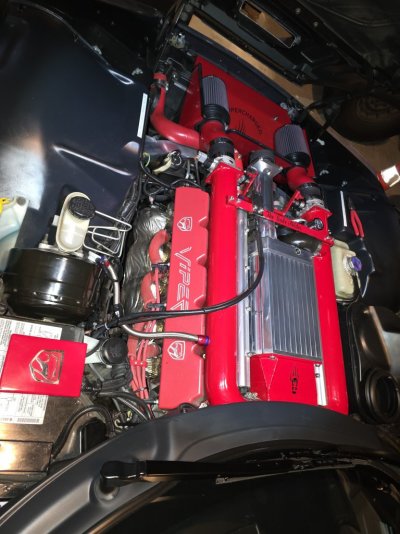
Looking for info on when Creampuff engines were first built in 1999.

Fatboy 18

Enthusiast
Joined
Jan 16, 2008
Posts
5,097
Reaction score
6
Location
Surrey, United Kingdom
Is there an identification number to tell on the blocks? I know production started in 1999 for the 2000 cast piston (creampuff) engines but was wondering when the the last forged engines went in the cars and then the swap to cast. Example, my car was built December 1999 with a creampuff engine and it's a 2000 model. I have another guy in the UK who's engine is dated 10-25-99 so trying to find out if this too is a creampuff
Thanks
 

daveg

Enthusiast
Joined
Dec 26, 2006
Posts
572
Reaction score
127
Location
Mass...
Mark, is that you?
So not sure of when they switched over but does the car sound like its got the Lumpy 708 Cam?
Pretty distinctive especially with that overlap when sitting in the car. Mine rocks me especially when cold.
 
Last edited:

BoondocSaint

Enthusiast
Supporting Member
Joined
Apr 27, 2022
Posts
228
Reaction score
137
Location
Washington
I know it's not as easy as checking a number, but dropping the pan will give you a definite answer on what parts are rotating in there.
 

daveg

Enthusiast
Joined
Dec 26, 2006
Posts
572
Reaction score
127
Location
Mass...
AI says the Build date of 10-25-99 has Cast Pistons. Take it with a grain of salt.
 

Steve-Indy

VCA Venom Member
Joined
Oct 2, 2000
Posts
8,764
Reaction score
332
Location
Zionsville,IN. USA
That seems plausible to me, Dave. I believe that production of new models generally started around August.

Offering no hard facts, my GUESS would be that all 2000's "started life" with the cast piston engines...and, as I recall, the first 100 of which were heavy oil consumers. Then the question becomes, were those engines rebuilt or were they replaced...and if replaced EARLY, could any of them gotten a forged piston motor off of the shelf?

For many reasons, one cannot assume things in this arena.

From the experience of one of my fellow club members whose 1996 GTS had been repeatedly repaired for incessant oil leaks (rear main, cam plug, porous oil pan), it was finally noted in 2001 or 2002+ that he had a porous block (along with a few other's). By that time period, supposedly Arrow Racing could only replace his engine with a cast piston version...which he accepted after being told there were no more forged piston versions available.

Viper Jeff...are you out there ??
 

daveg

Enthusiast
Joined
Dec 26, 2006
Posts
572
Reaction score
127
Location
Mass...
So I am VIN 33 on my 96. So early, that my Oil fill cap is on the drivers side. I also had all the classic 96 leaks in my car.

I sent it over to Tator and he went through it with a fine tooth comb and replaced all the Gaskets / Seals known to leak (Rear Main, Timing Cover etc etc etc) on especially early 96's

He did a great job and my car is now dry as a bone.

Steve, you are most likely right that all the engines for model year 2000 (even early ones) and above are probably Cast.

I Threw out the lumpy cam thinking that would be another indicator as there is no denying the signature idle of those cams due to that overlap!
 
Last edited:

ninetyninegts

VCA Venom Member
Venom Member
Joined
Oct 20, 2011
Posts
19
Reaction score
7
Is there an identification number to tell on the blocks? I know production started in 1999 for the 2000 cast piston (creampuff) engines but was wondering when the the last forged engines went in the cars and then the swap to cast. Example, my car was built December 1999 with a creampuff engine and it's a 2000 model. I have another guy in the UK who's engine is dated 10-25-99 so trying to find out if this too is a creampuff
Thanks
That is a good question. My 99 engine was built in July has the 708 cam. The car manufacturing date was Sept.
 

Attachments

  • 12-16-06_1326.jpg
    12-16-06_1326.jpg
    70.9 KB · Views: 6

daveg

Enthusiast
Joined
Dec 26, 2006
Posts
572
Reaction score
127
Location
Mass...
That is a good question. My 99 engine was built in July has the 708 cam. The car manufacturing date was Sept.
I am assuming your car is a 99 (or the engine is at least) ? If so, that would make sense. OP is referring to very early 2000's cars.
 

serafins

Enthusiast
Joined
Sep 2, 2024
Posts
130
Reaction score
71
Location
Metro Detroit
Fairly sure it was a hard cut off for 2000. I don’t think this was a scenario where leftover forged engines were put into 2000 model year cars. If the car was sold as a 2000, it had a creampuff engine. That’s my understanding. The switch had to do partially with emissions standards so I don’t think they were messing around with it.
 

daveg

Enthusiast
Joined
Dec 26, 2006
Posts
572
Reaction score
127
Location
Mass...
Ya they switched for Emissions, Cast is cheaper to make and NVH (Noise, Vibration, and Harshness)

Forged did return in the Gen 5's however (less Pistons unlike the 96 to 99 where its fully forged) because of the HP increase and Dodge felt because of this, they needed it built stronger to Survive Track Abuse.

I saw an Interview with Dick Winkles (Who was the lead powertrain engineer responsible for the V10’s design, development, and evolution on the Gen II's) and he stated the 96 to 99 Engine's were way over built and that was confirmed by Lamborghini. The 96 to 99 are considered the “holy grail” bottom ends

Lamborghini in order to save some weight (besides making it Aluminum) reduced unnecessary mass in non‑structural areas and convinced Dick it was still going to be extremely strong.
 
Last edited:
OP
OP
F

Fatboy 18

Enthusiast
Joined
Jan 16, 2008
Posts
5,097
Reaction score
6
Location
Surrey, United Kingdom
Mark, is that you?
So not sure of when they switched over but does the car sound like its got the Lumpy 708 Cam?
Pretty distinctive especially with that overlap when sitting in the car. Mine rocks me especially when cold.
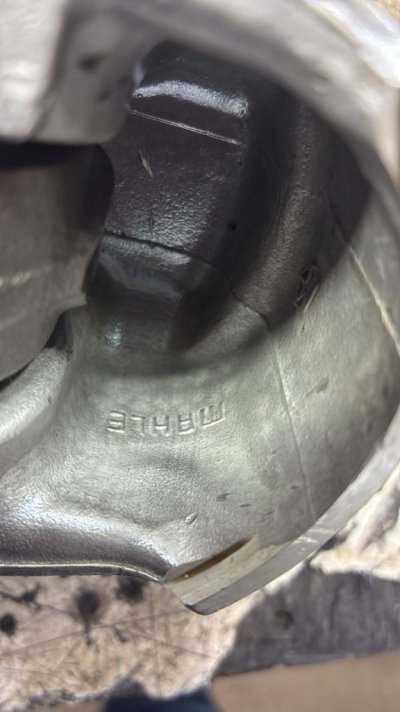
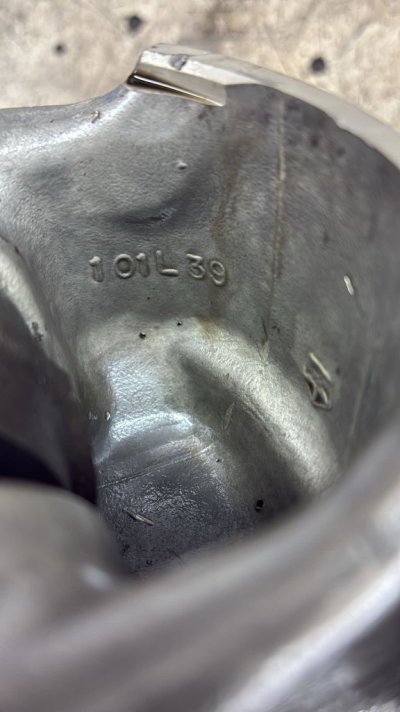
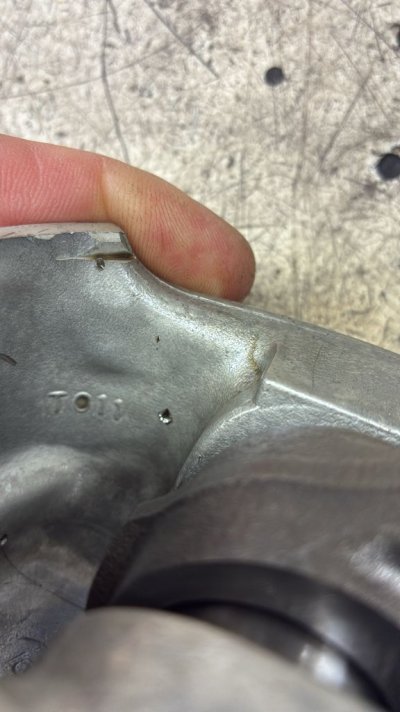
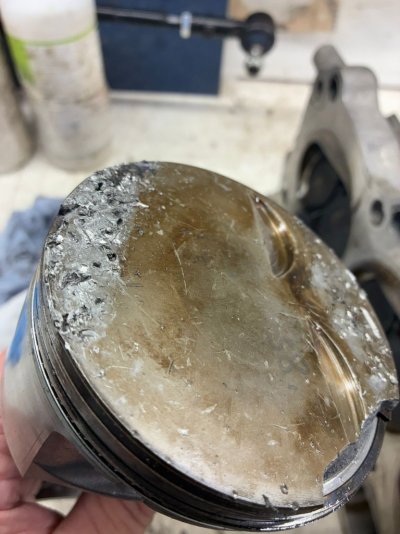
Yes, it's me, all good. Trying to identify a friends car where he had an issue with a piston, trying to work out if its cast or forged, (engine is apart)
 

Attachments

  • 701789069_10165372576246742_6556647289887295231_n.jpg
    701789069_10165372576246742_6556647289887295231_n.jpg
    83.5 KB · Views: 15
  • 702570430_10165372576421742_5435152972983836691_n.jpg
    702570430_10165372576421742_5435152972983836691_n.jpg
    81.8 KB · Views: 11
  • 701385735_10165372576391742_763686138966093702_n.jpg
    701385735_10165372576391742_763686138966093702_n.jpg
    93 KB · Views: 14
  • 701445400_10165372576281742_2353966977449812195_n.jpg
    701445400_10165372576281742_2353966977449812195_n.jpg
    131.5 KB · Views: 15

BoondocSaint

Enthusiast
Supporting Member
Joined
Apr 27, 2022
Posts
228
Reaction score
137
Location
Washington
At a glance that little bit of side profile suggests hypereutectic pistons, (synonymous with cast). Poor thing looks like it was chewing on something.
 

daveg

Enthusiast
Joined
Dec 26, 2006
Posts
572
Reaction score
127
Location
Mass...
Hey Mark, its been a while. Nice to see you again!

Check the piston crown for markings

Factory cast pistons typically have:
  • Mopar part numbers
  • Casting numbers
  • Small raised identifiers
For Forged there are Deeply engraved part numbers:
  • Not raised. Not cast in.
  • Engraved with a CNC machine.
From the Pics, looks like Cast

Mark, if the Motor is apart, maybe its time for Forged Pistons and True Forged Rods instead of the Cast Pistons and powder‑forged (also called sinter‑forged) Rods?
May want to consider it especially if your boosting. The Ring Land on the Forged Pistons are much stronger, Just something to think about.

Maybe Dan will chime in incase some of my information is incorrect.
 
Last edited:

BoondocSaint

Enthusiast
Supporting Member
Joined
Apr 27, 2022
Posts
228
Reaction score
137
Location
Washington
Got a question on that piston for the folks in the know. 2,000 was a transition year for Vipers, and the top of that piston looks a little different than what I remeber. I thought both forged and cast were flat top pistons, but that one appears not to be. Did find another picture of a 2000 piston on the interwebs that looks like that one, was that a one off year for those particular pistons?
 

daveg

Enthusiast
Joined
Dec 26, 2006
Posts
572
Reaction score
127
Location
Mass...
Got a question on that piston for the folks in the know. 2,000 was a transition year for Vipers, and the top of that piston looks a little different than what I remeber. I thought both forged and cast were flat top pistons, but that one appears not to be. Did find another picture of a 2000 piston on the interwebs that looks like that one, was that a one off year for those particular pistons?
So I think you are right, Cast tops have Slightly different dish geometry and Thinner crown? and Forged has More machining marks (visible swirl or cross‑hatch patterns) and Thicker Crown? not 100% sure though
 

serafins

Enthusiast
Joined
Sep 2, 2024
Posts
130
Reaction score
71
Location
Metro Detroit
That is not a stock forged piston. The stock forged piston has a very distinctive bullseye style mark in the middle. I’d venture a guess that it’s a cast piston with valve reliefs cut into it during previous engine work. no surprise it lost a chunk right where the valve relief was cut in, must be razor thin there.
 

BoondocSaint

Enthusiast
Supporting Member
Joined
Apr 27, 2022
Posts
228
Reaction score
137
Location
Washington
That's what I was curious about. I thought factory forged and cast lacked the valve cuts, but maybe was a one off year for cast 2000 pistons.
 

GTS Dean

Enthusiast
Joined
Jul 22, 2000
Posts
4,153
Reaction score
480
Location
New Braunfels, Texas
The Y2K EPA emissions regs were tightening significantly and they were really having to engineer these motors to comply with lower hydrocarbon limits. The cams were re-spec'd with less overlap, (at least partly due to complaints about NGR at idle) but no published change in advertised horsepower & torque for the package. With the Viper model, Dodge began moving away from industry-standard new 'model year' introduction in the early fall and toward a true calendar year production schedule. It is reasonable to expect that January vehicle production/deliveries had engines that were assembled in Nov/Dec. I would think it rather unlikely that any more than a handful of corporate 'mule cars' were produced in 1999 spec build with the cast piston/short overlap cam combination.

2000 was by many accounts a very special case year. Some say Dodge quietly threw a factory "ringer" package into the SCCA T-1 competition. I've heard and read that the cast hypereutectic pistons were a good bit lighter than the forged units and that perhaps the rings were moved up closer to the crown. Fatboy's last photo would appear to confirm this is indeed the case. These pistons have a tighter wall clearance, much less thermal expansion with temperature increase and better combustion characteristics. Widespread reports of excessive break-in oil consumption is probably due to an unspoken need to be a bit more aggressive with driving style to get them seated.

The ACR package was in its second year and one of the most significant changes was to the shock absorbers. The Koni 2812 MKII only made it thru mid-2000 and were switched in favor of Dynamic dampers which were being run on the GTS-R competition models. Other than rattling springs at full droop, the Konis have proven to be more reliable shocks than the Dynamics which have poor sealing characteristics and a valving range that doesn't seem to work for a street car. All the ACR's have moderately stiffer front springs and very stiff rear springs - in the vicinity of 1100#/inch. This makes them unpleasant for street driving, but are class-legal standard equipment and really shine when used with the GT-2 factory rear wing and splitter in SCCA T-1 racing.
 
Last edited:

Damn Yankee

Enthusiast
Joined
Jun 2, 2023
Posts
14
Reaction score
5
Location
The Great North
I take it that someone is concerned that having a cast piston in their block is going to be problematic because their builds are going to go over 800 horsepower, have I got that right? For those of us who've been driving these cars for 26 years, and have supercharged them, I'd make the following observations to be as helpful as I possibly can.

First and foremost if you're keeping your horsepower under 750 horsepower, the cast are superior in every way. The number is, as I already stated 800, but I'm going to take it for granted it may be difficult for people with forced induction engines to, one get their tuning right and, two perhaps actually know what their resulting horsepower is.

First off the idea, as stated above, that hypereutectic pistons can be identified when you start the motor by smoke is incorrect. Those Pistons are much tighter than forged pistons. They required longer break in and higher RPM driving to get them seated. Once they were they produce less smoke not more. To the point that I would say if you were looking at a Viper that's got miles on the odometer and it's smoking it's most certainly more likely to be a forged piston.

We used to read about hypereutectic (sometimes referred to as cast) pistons in the VCA threads all the time back in the day. These threads usually refer to concerns by Viper owners of those years as it relates to the limitations of cast pistons, especially in forced induction engines. The vast majority of Viper owners then we're driving around in stock cars and those cars were more powerful than most cars on the road . These were the initial days of supercharging and turbocharging Vipers and there were real concerns about a lot of components including pistons. But upon understanding them, I want to make one thing perfectly clear. If you're buying a Viper that has hypereutectic pistons in it from the factory and you're going to be running it stock or doing minor changes, that would include things like headers, smooth tubes, better head, supercharging or turbo all of which you anticipate producing less than 750-800 overall horsepower, you're fine, you're better than forged. If you're going to build over 750, maybe 800 horsepower you have got to change your Pistons. But in doing so, you can add forged pistons a relatively long list of things you're going to need to do.

So what are hypereutectic pistons? Simply put they are cast pistons as opposed to being forged. Almost all pistons have aluminum in them. By being cast, hypereutectic pistons are able to have a much higher amount of silicon in the alloy. This silicon greatly increases the thermal stability and, as a result, these piston’s dimensional tolerances can be much tighter (most cast piston have a skirt clearance of approximately .0007 to .0009, forged about .005 to .007). Their expansion rates are much smaller. When cold, these pistons are much tighter than forged pistons (especially at the skirt and towards the top where the rings are), therefore they rock less, their rings seal better and they have less blow-by. End of the smoke myth #1. They are lighter and quieter as well. And all that silicon makes them harder (unlike higher aluminum content in forged pistons) so that they don’t “scuff up” the cylinder walls when cold and in a low oil start-up. End of the smoke myth #2. But, all that goodness comes at a price, and that price is brittleness. Hypereutectic are much more brittle than low silicon forged pistons. Like just about every other selection and choice one makes when building heavy horsepower motors, you got to use the right products for the right horsepower.

 
Last edited:

daveg

Enthusiast
Joined
Dec 26, 2006
Posts
572
Reaction score
127
Location
Mass...
So I agree with the above posts, well written...

Depending on what you are trying to Achieve, Boost, Stock etc... you choose the components that suitable for the build especially if it can save you $$$$.

Forged components (ie: pistons) can take a beating especially when you get to high RPM's (track conditions) and under detonation (bad tuning, lack of knock sensors etc...). Ring Land strength is also a plus and Forged components tend to deform, often saving the engine vs the Piston cracking and taking it out.

One other thing to note, I believe the 96 to 99 has an ever so slight higher compression ratio VS 2000 to 2002? I believe Dodge lowered compression to reduce detonation risk with the cast pistons.

Either way, all the Viper motors were over built which in the end is a good thing for us owners.
 
Last edited:

white out

Enthusiast
Joined
Jan 25, 2009
Posts
1,162
Reaction score
52
Location
The Mitten
I think cast is superior to forged if not running boost. Noticeably quicker revs and that is exacerbated when doing other lightened rotational mass items. 708 cam is more fun at idle.

First off the idea, as stated above, that hypereutectic pistons can be identified when you start the motor by smoke is incorrect.
The first batch of 2000's motors are known as oil burners. I had one for 4 years and a GT3 at the same time, startup was the same smokey experience.


daveg

Enthusiast
Joined
Dec 26, 2006
Posts
572
Reaction score
127
Location
Mass...
Heavier forged pistons do reduce rotational speed capability because they increase reciprocating mass, stress, and inertia but for the Viper's V10, the strength benefits of Forged far outweigh the RPM penalty, because the engine is not designed to rev high.

Even if you dont boost, you can still have failures with Cast due to
• Bad gas
• Too much timing
• Lean conditions
• Heat soak
• A single detonation event

Is it common, no but can happen especially if you play with tuning. So their are benefits to Forged even if you don't Boost just like there are advantages to Cast but strength isn't one of them.
 
Last edited:

Damn Yankee

Enthusiast
Joined
Jun 2, 2023
Posts
14
Reaction score
5
Location
The Great North
From the stock 450hp to the limit of 750hp gives you enough room not to worry about it. You stand a bigger chance of blowing the disassembly and assembly for new Pistons then ever will having a problem with cast Pistons. In speaking with Chuck today I asked him if in all his years of working with vipers did he ever have a non forced induction engine with cast Pistons create a problem..... not once. The benefits outweigh the non-existent risks.
 

Attachments

  • CT LARGE.jpg
    CT LARGE.jpg
    156.1 KB · Views: 10
  • apocalypto-portada.gif
    apocalypto-portada.gif
    405.3 KB · Views: 10
  • 20260220_164401.jpg
    20260220_164401.jpg
    150.3 KB · Views: 9

daveg

Enthusiast
Joined
Dec 26, 2006
Posts
572
Reaction score
127
Location
Mass...
From the stock 450hp to the limit of 750hp gives you enough room not to worry about it. You stand a bigger chance of blowing the disassembly and assembly for new Pistons then ever will having a problem with cast Pistons. In speaking with Chuck today I asked him if in all his years of working with vipers did he ever have a non forced induction engine with cast Pistons create a problem..... not once. The benefits outweigh the non-existent risks.
This is because the Viper Motor is so overbuilt (as Dick Winkle stated in the round table) like I mentioned above a couple times.

This is great for Viper owners...
 
OP
OP
F

Fatboy 18

Enthusiast
Joined
Jan 16, 2008
Posts
5,097
Reaction score
6
Location
Surrey, United Kingdom
That's interesting Dan. Have to admit my 2000 Creampuff uses a fair bit of oil (but then again I have done 123k miles without pulling the engine apart). Not being good at Math, rebuilding an engine scares the hell out of me when you have to inspect and start measuring bearings and piston rings Cylinder bores etc
 
Top